

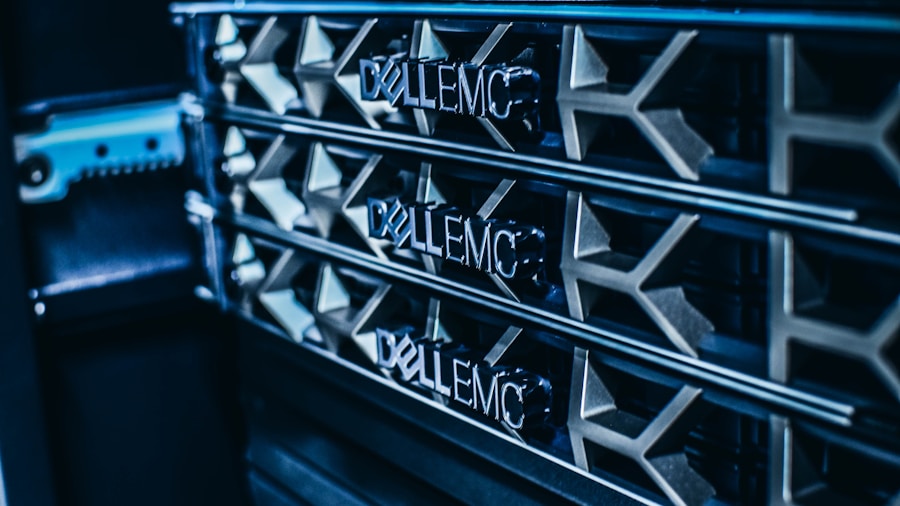
Dell has achieved a major milestone in data center storage density by fitting nearly 10 petabytes of raw all-flash capacity into a single 2U server chassis. By combining 40 of KIOXIA’s 245.76TB NVMe solid-state drives with Dell’s ObjectScale platform running on PowerEdge R7725 servers, the company has demonstrated that extreme storage consolidation is now practical for enterprise workloads. This breakthrough carries significant implications for organizations building AI data lakes, vector databases, and large-scale analytics platforms.
Record Density Solves Real Data Center Challenges
The 9.83 petabyte capacity in minimal physical space directly addresses constraints that plague modern data centers. As enterprises expand their AI training pipelines, fine-tuning operations, and compliance storage requirements, floor space, power consumption, and cooling demands have become critical bottlenecks. A single 2U form factor delivering this much capacity means fewer rack units consumed, lower energy bills, and reduced cooling infrastructure needed to support massive unstructured data repositories.
This density achievement is not theoretical. Dell’s internal testing shows the R7725 configuration can deliver up to 40GB per second of read throughput per node, representing an 8x improvement compared to previous all-flash object storage platforms. Real-world validation comes from a UK-based high-frequency trading customer sustaining approximately 280GB per second of aggregate read throughput in production environments. These numbers demonstrate that density gains do not sacrifice performance, a critical concern for time-sensitive workloads.
Software Innovations Unlock Performance Gains

Beyond raw capacity, ObjectScale 4.2 and 4.3 introduce architectural improvements that enhance practical usability. The platform now features an optimized chunk-store engine that aggregates small payloads into unified 128MB blocks before applying erasure coding across distributed nodes. For typical 10KB files, this means more than 10,000 individual objects compress into a single chunk, dramatically reducing metadata overhead that typically slows small-object retrieval. When drive failures occur, the system must rebuild millions of shards rather than billions, cutting recovery timeframes from weeks down to hours on these dense NVMe configurations.
The re-engineered Key-Value Store delivers approximately 4x better memory efficiency while cutting metadata disk footprints by 30 to 60 percent. For organizations storing millions of feature sets, vector chunks, and telemetry logs, this translates to faster queries and lower operational costs. Inline checksums verified at stripe level further reduce CPU overhead spent on background integrity scans, leaving more processing power available for user-facing workloads.
S3 Over RDMA Accelerates AI Inference
ObjectScale 4.3 adds S3 protocol support over RDMA networking, utilizing RoCEv2 technology to establish direct memory paths between host GPUs and backend NVMe storage. This bypasses traditional TCP kernel overhead and CPU interrupts entirely. Internal testing indicates the approach delivers 230% higher throughput, 80% lower latency, and up to 98% reduction in client CPU utilization compared to standard S3 over TCP protocols. For inference workloads where milliseconds matter, this performance gain is substantial.
The platform now supports Key-Value cache offload for large language models through integration with vLLM, LMCache, and NVIDIA’s NIXL library. Because long-context inference rapidly exhausts GPU memory resources, offloading active attention states directly to ObjectScale storage over RDMA-accelerated S3 extends model capabilities. Dell reports up to 19x improvement in time-to-first-token metrics, 5.3x higher token throughput, and nearly 3x higher multi-turn conversation throughput. A head-to-head comparison showed time-to-first-token of approximately 0.86 seconds against competing platforms.
What Buyers Should Know
Organizations currently evaluating NVMe storage infrastructure should understand that extreme capacity density is now achievable without sacrificing throughput or reliability. The combination of high-capacity individual drives and intelligent software creates compelling economics for enterprises building data lakes. Erasure coding profiles of 24+2 and 24+4 configurations reduce write amplification by up to 75%, lowering the total cost of ownership when accounting for drive wear and replacement cycles.
Native S3 Tables bringing Apache Iceberg support allows query engines including Trino, Spark, and Flink to run analytics directly against storage buckets without separate data movement or ETL staging operations. Dell reports this architecture achieves up to 2x faster data ingestion and up to 4.5x faster query performance compared to traditional warehouse configurations. For organizations with large analytical workloads, avoiding data duplication alone justifies serious consideration of this approach.
As flash storage technology continues advancing in capacity, the practical challenge shifts from finding enough storage to managing it efficiently. Dell’s ObjectScale platform demonstrates that intelligently designed software can maximize the utility of high-density hardware. Workload-specific bucket compression supporting Snappy, LZ4, ZSTD, and Deflate algorithms provides additional flexibility, with FinOps telemetry enabling accurate cost tracking across different storage tiers and compression methods. For enterprises planning multi-petabyte infrastructure deployments, understanding these technological advances helps ensure investments remain relevant for years to come.





Write Your Review
No reviews yet. Be the first to share your experience!