

Devolo has released its WiFi 7 Mesh BE6500 system, bringing a new affordable option to the mesh networking market. This announcement is significant for shoppers looking to upgrade their home connectivity without spending premium prices on cutting edge equipment. The BE6500 arrives as WiFi 7 technology becomes more mainstream, though most consumers still face steep costs when upgrading their networks.
What Makes This System Stand Out
The BE6500 takes a flexible approach to dual band WiFi 7 that differs from competing models. Rather than locking you into one frequency configuration, Devolo gives owners a choice: use the 2.4GHz and 5.0GHz bands together for maximum backward compatibility with older devices, or switch to 2.4GHz and the speedier 6.0GHz band for newer computers and phones that support WiFi 6E or WiFi 7. This flexibility addresses a real problem that many households face when mixing older and newer devices on the same network.
The pricing is competitive for the category. A three pack covering larger homes costs approximately $399.90 in Europe, with individual expansion routers available for around $149.90 each. This undercuts some rivals like Amazon’s Eero 7 and Netgear Orbi 373, both of which offer fewer configuration options while costing more. If you’re considering an upgrade to modern WiFi 7 range extension solutions, the BE6500 provides solid value for the money.
Performance and Real World Testing

Testing reveals that the BE6500 trio delivers consistent performance across home environments. Speed tests using both frequency band combinations maintained 150Mbps download and upload speeds at distances up to 30 feet away, even through multiple walls. The 2.4GHz plus 6.0GHz configuration performed particularly well, maintaining steady speeds throughout testing without fluctuation.
For households dealing with WiFi deadspots, the system proved effective. Placement of extension units strategically between the main controller and problem areas ensured reliable coverage. Steam downloads reached 150Mbps consistently in previously difficult to reach spaces, addressing a common frustration for larger homes or buildings with structural obstacles.
User Experience and Setup Challenges
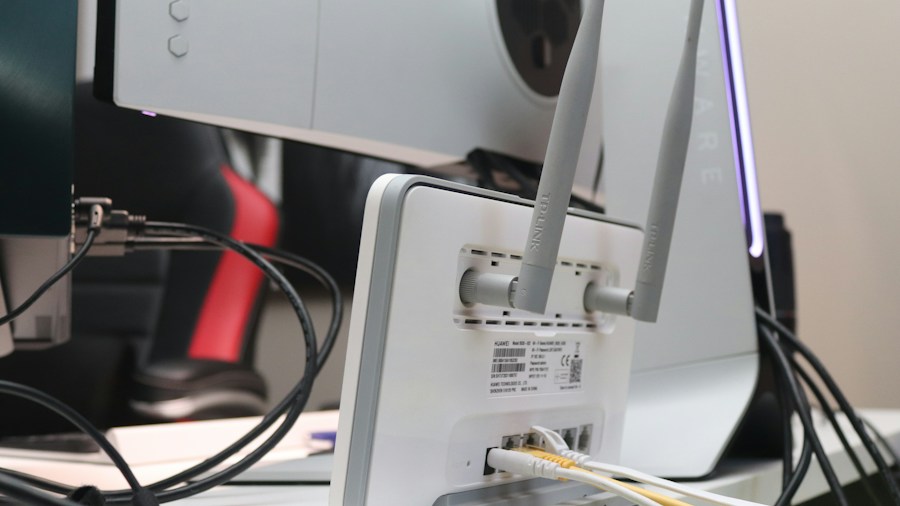
The setup process reveals where the BE6500 falls short of excellence. While initial controller configuration using a QR code scan feels modern and straightforward, adding extension routers requires repeated manual intervention. The system can only connect one extension at a time, forcing users to set up the first unit, unplug it, move it to its final location, then repeat the entire process for additional units. This is less elegant than mesh systems that automatically detect and add multiple units simultaneously.
The app interface presents another usability hurdle. Selecting between frequency band configurations is not intuitive within the mobile app. Users must log into a web browser interface to access important settings like frequency band switching and quality of service controls. For customers unfamiliar with network administration through web interfaces, this creates confusion. The company positions this as a features advantage, but many users will find it frustrating rather than empowering.
Who Should Buy and Who Should Wait
The BE6500 makes sense for homeowners with larger properties struggling with coverage gaps who want to future proof their networks without maxing out their budgets. The option to start with 5.0GHz compatibility and upgrade to 6.0GHz later provides genuine upgrade flexibility as your device collection evolves. Visit our guide on WiFi 7 wireless technology for gaming to understand how the 6.0GHz band benefits high performance applications.
Beginners or less technical users should probably look elsewhere. The confusing app and reliance on web browser configuration will create frustration. Buyers on tight budgets should also consider whether WiFi 6 or WiFi 6E systems might serve them adequately before jumping to WiFi 7, since those earlier standards offer solid performance at lower price points.
One important limitation for US shoppers: Devolo currently operates only in Europe and the UK market. The company has not announced US availability as of now. If this system does eventually reach American shelves, it would represent a compelling mid tier option. Looking ahead at the next generation WiFi 8 standards arriving in 2027, the BE6500’s flexible architecture could keep your home network relevant for several more years.
The BE6500 proves that WiFi 7 doesn’t require spending premium amounts, but the design does compromise on ease of use for the sake of cost control. For technically comfortable users seeking reliable coverage of large homes at reasonable prices, it delivers solid value despite its quirks.






Write Your Review
No reviews yet. Be the first to share your experience!