

Sonos has released its latest mid-range soundbar, the Beam Ultra, hitting the market in late September at a $699 price point. The new model brings Dolby Atmos, AI-driven speech enhancement, and a redesigned speaker array that promises deeper bass and better height processing than its predecessor. For shoppers evaluating whether this soundbar makes sense for their space, the key question is whether it delivers enough performance on its own or requires additional speakers to justify the cost.
Setup and Ease of Use
Getting the Beam Ultra running is straightforward. It connects to your TV via HDMI eARC, pairs with the Sonos app over Wi-Fi, and requires minimal configuration. The soundbar itself stays compact, fitting neatly under most televisions without dominating the entertainment space. Physical buttons on top let you adjust volume and access controls without relying on your phone, while the app offers a clever two-finger rotation gesture for volume adjustment that feels intuitive once you get past the initial novelty.
One thing to check before purchasing: your TV’s connectivity options. If your TV only has an older optical audio output instead of HDMI eARC, you will need to buy Sonos’s optical adapter separately. Since some advanced audio formats like Dolby Atmos require HDMI eARC to function, this compatibility check matters before spending nearly $700.
The app interface keeps most adjustments accessible without overwhelming menus. Bass, treble, rear speaker levels, and the new Speech Enhancement feature sit right on the main playback screen. Sonos also includes Trueplay, a room-tuning technology that analyzes your space and adjusts sound accordingly. In testing, the calibration was quick and worked correctly on the first attempt.
Sound Quality and Bass Performance

The standout surprise is how much bass the Beam Ultra delivers without a separate subwoofer. During testing in a large office space, a colleague asked whether a Sub was connected, even though none was. Explosions carried weight and depth, while gunshots cracked cleanly across the soundstage without muddying dialogue. This bass performance matters because many apartment dwellers and smaller-room owners worry they cannot get movie-theater-level impact from a single bar.
For content with Dolby Atmos, the height channels create a noticeable sense of vertical space. Overhead effects like ricocheting bullets or falling objects extend upward from the bar rather than anchoring everything to your TV stand. The effect is not immersive enough to replace ceiling speakers, but it adds dimension that single-bar soundbars typically miss.
Speech Enhancement features multiple levels rather than just on-or-off toggling. Medium mode worked well in quiet rooms, while High mode kept dialogue present even when background noise increased. Morgan Freeman’s narration in nature documentaries stayed anchored in front, with music and environmental sound layered around it. For anyone frustrated by modern TV dialogue that requires constant volume adjustment, this feature delivers real value.
Expanding with Rear Speakers
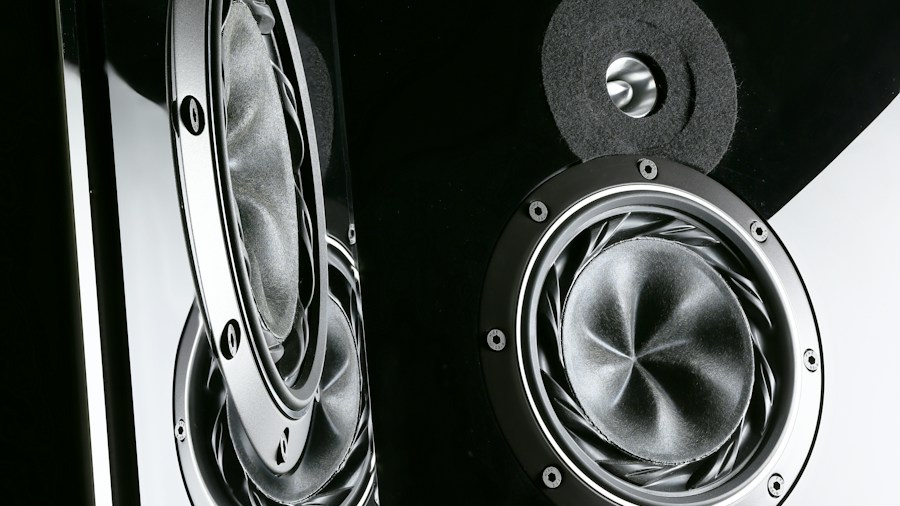
Adding a pair of rear surrounds, such as Sonos Play speakers, transforms the experience. With rears in place, ambient effects and music spread throughout the room. Police sirens whip behind your listening position, and atmospheric sounds hang in the space rather than vanishing into the front soundbar. The difference is obvious when you switch between single-bar and surround modes.
The advantage of pairing the Beam Ultra with flexible speakers like the Play models is their portability. You can move them to other rooms during the day and return them for evening movie time, rather than permanently mounting dedicated surrounds. For apartments and smaller homes, this flexibility makes more sense than buying fixed surround speakers.
If you’re considering the Sonos ecosystem, compact soundbar alternatives with surprising bass power are worth comparing, as are gaming-focused options launching in the US market if you use your TV for both movies and gaming.
Value and Buying Recommendations
At $699, the Beam Ultra sits below Sonos’s larger Arc Ultra model. For apartments and smaller living rooms where a single soundbar handles all entertainment needs, it delivers strong performance without requiring subwoofer additions. The bass depth, dialogue clarity, and height processing address the main pain points that drive soundbar purchases.
However, $699 is significant money for audio equipment. Shoppers should plan to add rear speakers before considering a subwoofer, as surrounds create a more impactful upgrade than a Sub in smaller spaces. If your room exceeds 700 square feet and you want to build a comprehensive home theater system, the Arc Ultra may justify the additional expense. For everyone else, the Beam Ultra handles movies, shows, and everyday listening without needing to spend more immediately.
The biggest advantage is flexibility. You can use it as a standalone bar and ignore the deeper Sonos ecosystem, or gradually expand into multiroom audio, voice control, and other features. That optional complexity matters when deciding whether a $700 audio investment fits your needs and lifestyle.










Write Your Review
No reviews yet. Be the first to share your experience!