

GPU Powers Compact AI Model to Master Classic Video Game
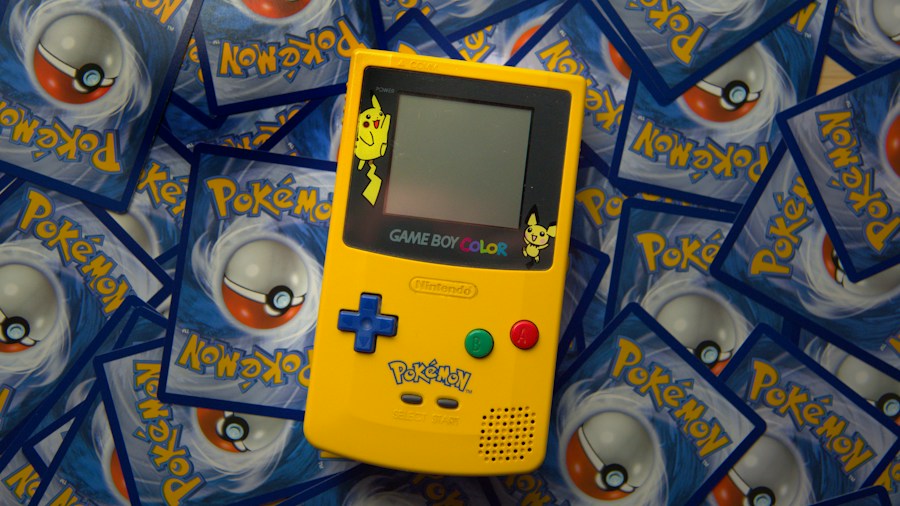
A developer recently achieved a notable milestone: training a compact artificial intelligence model on a single RTX 3080 Ti graphics card to learn how to play Pokemon Red. The model, built using world model architecture, discovered the function of each button input purely through observation and prediction, without being explicitly told the game’s rules or objectives. This accomplishment demonstrates that consumer-grade gaming GPUs can handle sophisticated machine learning tasks beyond rendering and display.
The AI model contained only 12.5 million parameters, making it dramatically smaller than many modern AI systems. Rather than attempting to predict an entire game screen at once, the model created compressed summaries using just 192 numerical values. This efficient approach allowed the entire training process to run on a single desktop GPU, proving that cutting-edge AI research does not always demand expensive server farms or specialized hardware.
How the Model Learned to Play
The training process required over 42,000 grayscale video frames gathered from more than 1,000 separate play sessions. The developer used various training data sources: scripted button sequences, scripted sequences with random inputs mixed in, and completely random exploration. This diversity was crucial because a model trained only on clean, perfect playthroughs would struggle to understand button functions in unexpected situations.
The model operated in two phases. First, it learned what the game world looks like and how button presses change it, without any awareness of winning conditions or gameplay objectives. Second, the model planned sequences of moves and tested them in simulation before executing them in the actual game. Each planning cycle generated 512 possible action sequences, kept the best 64, and refined them until a final plan emerged for actual gameplay.
Initial attempts showed mixed results. The first successful run selected Squirtle as a starter Pokemon, and subsequent tests achieved a 52 percent success rate across 100 runs from the same starting save file. This substantially outperformed random button pressing and untrained models, validating the approach despite its modest scope.
Why This Matters for GPU Shoppers
This project illustrates that modern graphics cards offer tremendous versatility beyond gaming and content creation. The RTX 3080 Ti, a card marketed primarily for high-end gaming performance, successfully handled research-grade machine learning work. As GPU computing becomes increasingly central to AI development, even consumer-focused cards now provide legitimate tools for experimentation and learning.
For enthusiasts and hobbyists interested in machine learning, the project suggests that expensive specialized hardware is not mandatory for starting AI work. The open-source code and relatively straightforward technical approach mean that developers with modest GPU resources can engage in serious research. This democratizes access to practical AI training, similar to how Discord’s game mode reduces GPU and CPU strain automatically to improve user experience across varied hardware configurations.
Challenges and Future Possibilities
The developer acknowledged that scaling up to more complex gameplay scenarios presents exponential difficulty increases. The current model successfully picked a starter Pokemon, but advancing further in the game, such as navigating dialogue, walking to the professor, and completing longer sequences, would require either larger models or fundamentally different architectural approaches. Simply making the existing model bigger would not solve the problem, according to the developer’s assessment.
Compounding prediction errors represented another discovered limitation. When the model predicted one step based on its own previous predictions, small inaccuracies accumulated, sometimes causing failures in gameplay. Fine-tuning strategies and alternative architectures could potentially address this, opening doors to more ambitious projects.
Broader Implications for AI and Hardware
This work follows established research patterns in the AI community, building on work by respected scientists who are exploring how smaller, efficient models can accomplish specific tasks. The approach contrasts sharply with recent massive language models requiring enormous computational resources. Instead, it suggests that purpose-built, smaller models remain valuable for targeted applications.
The project underscores GPU manufacturers’ expanding role in AI advancement. As more developers train models locally rather than relying exclusively on cloud services, demand for consumer and prosumer-grade GPUs continues growing. Supply chain reliability becomes increasingly important as GPU demand grows across multiple industries and use cases.
The code for this project remains publicly available on GitHub, inviting other developers to experiment, adapt, and build upon the work. This open-source approach accelerates collective learning and demonstrates that significant technical achievements do not require proprietary or restricted resources.
For GPU buyers today, this development reinforces that purchasing a capable graphics card opens possibilities far beyond the intended primary purpose. Whether you game, create content, or explore AI, modern GPUs deliver flexible computing power that justifies the investment across multiple domains and use cases.



Write Your Review
No reviews yet. Be the first to share your experience!