

A Chinese manufacturer has created an unusual variant of Nvidia’s RTX 3060 graphics card that runs entirely off PCIe slot power without any external connectors. While the idea of a tiny, power-efficient GPU sounds appealing in theory, real-world testing reveals significant compromises that make it impractical for most users.
What This Card Actually Is
The standard RTX 3060, originally released in early 2021, draws 170 watts of power and includes 6-pin or 8-pin PCIe power connectors to supply that energy. This new variant cuts power consumption down to just 75 watts, matching the maximum power a single PCIe x16 slot can deliver on its own. The result is a single-slot, low-profile card with a blower-style cooler roughly the size of a smartphone.
Achieving this required aggressive modifications. The card uses a thin metal shroud as its primary cooling surface, direct metal-to-core contact instead of traditional thermal pads, and a single intake fan with minimal airflow design. There’s no backplate, no fin stack, and memory chips sit directly against the shroud with no thermal paste between them. Connectivity is limited to one HDMI and one DisplayPort output.
Performance Reality Check
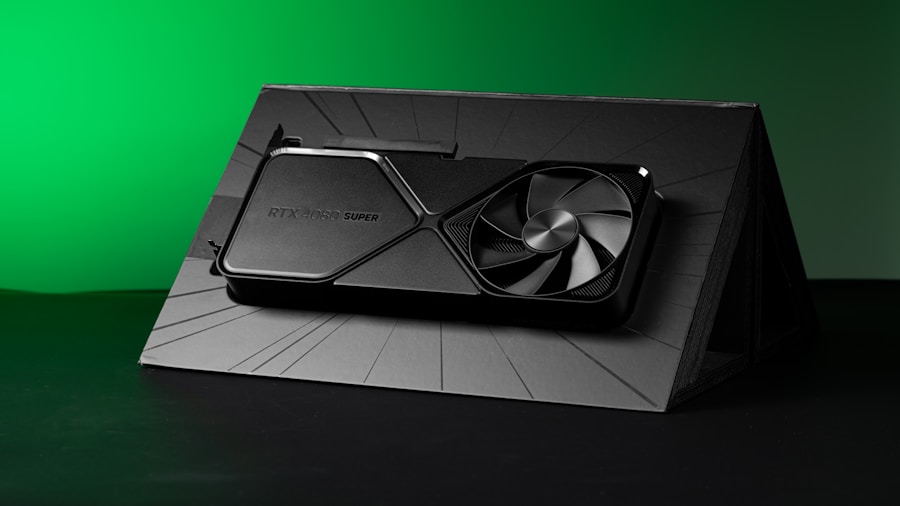
Testing this card exposed severe performance limitations. The GPU barely reached 900 MHz during benchmarks despite having a rated boost clock of 1,770 MHz. In the Time Spy benchmark test, it scored only 4,821 points. For context, a regular RTX 3060 typically scores above 9,000 points in the same test. Even older budget cards like the RX 580 and GTX 1060 outperformed this variant significantly. While newer GPU releases command attention, this ultra-low power variant demonstrates that extreme power restrictions destroy usability.
Thermal Problems Compound the Issues
The cooling challenges are even more concerning than the performance deficit. During testing, the GPU hotspot exceeded 90 degrees Celsius, indicating that the minimal cooler design cannot handle even 75 watts of power dissipation effectively. The card experienced severe thermal throttling, meaning the system automatically reduced clock speeds further to avoid overheating.
This creates a vicious cycle: the power budget is already cut in half, and thermal throttling further reduces what little performance remains. A design that skimps on thermal management while running this close to thermal limits is inherently unreliable for sustained use.
Why Someone Built This
The RTX 3060 already supports undervolting down to 100 watts while maintaining modest performance levels. A card that forces 75-watt operation requires a shunt modification, a technique typically used to bypass power limits for overclocking. In this case, the goal was the opposite: achieving a card that needs nothing more than a PCIe slot.
The motivation likely stems from system integration scenarios where adding external power connectors is inconvenient or where space is extremely limited. However, modern alternatives like competing GPU architecture options or integrated graphics in current mini PCs offer comparable or superior performance without these compromises.
What This Means for Shoppers
This experimental card serves as a cautionary tale about the limits of downgrading core components. A graphics card needs adequate power delivery and cooling capacity to function properly. Cutting both simultaneously creates a device that underperforms comparable integrated graphics solutions available in 2026.
The RTX 3060 remains a capable mainstream gaming GPU at its standard 170-watt specification. If you need a compact card, the original design still represents reasonable value. If you’re building a space-constrained system, modern mini PCs with powerful iGPUs or contemporary discrete GPUs designed for low power consumption are far better choices than this experimental variant.
The takeaway: extreme engineering trade-offs that sacrifice both thermal management and power delivery produce unusable products, regardless of how clever the concept seems on paper. When evaluating GPU options, prioritize balanced design over novelty factors.



Write Your Review
No reviews yet. Be the first to share your experience!