

A Brazilian hardware enthusiast has successfully built what may be the world’s only working RTX 3070 Ti with 16GB of VRAM, a configuration that Nvidia originally planned but never released to consumers. The custom creation reveals forgotten engineering decisions and raises important questions about GPU memory, performance, and whether older cards are still worth buying today.
The Card That Never Was
Years ago, before Nvidia released the RTX 3070 Ti, plans called for the card to come equipped with 16GB of memory instead of the standard 8GB. Database listings and occasional leaks hinted at this version’s existence, but no working prototype ever reached the public until now. Modder Fabian decided to reverse-engineer the concept using an RTX 3070 PCB as the foundation, swapping in a 3070 Ti GPU core and upgrading the memory configuration to match the original vision.
How the Modification Works
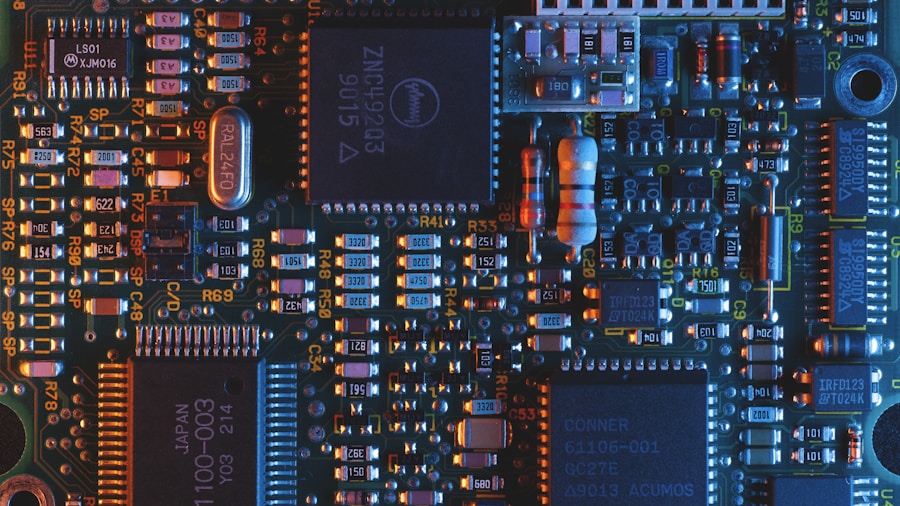
The project required precise technical knowledge and careful soldering work. Fabian started with an RTX 3070 board and removed its standard GPU chip, replacing it with a more powerful 3070 Ti core. The key challenge involved memory configuration. The RTX 3070 uses GDDR6 memory chips, while the retail RTX 3070 Ti typically uses the faster GDDR6X standard. To keep costs reasonable, Fabian swapped the existing 8GB Samsung GDDR6 chips for higher-capacity 16GB versions, effectively doubling the memory pool.
However, installing larger chips wasn’t enough. The graphics card’s BIOS contained memory configuration settings, called “straps,” that needed recalibration. Using Nvidia’s BIOS Reader tool, Fabian identified the correct values and performed additional soldering to apply the changes. After the modification, the card properly recognized all 16GB of VRAM without errors, confirming the concept could actually work as originally designed.
Performance Testing and Trade-offs
To verify the card functioned properly, Fabian tested it with demanding workloads. Running a local AI language model showed the GPU successfully allocated memory beyond the typical 8GB limit, utilizing nearly the full 16GB capacity. Call of Duty: Warzone consumed over 13GB of VRAM without crashes or instability when paired with a Ryzen 7 9800X3D processor. Benchmark scores matched expectations for a 3070 Ti, confirming stability across different scenarios.
The experiment did reveal one important trade-off. GDDR6 memory has lower bandwidth compared to GDDR6X, which slightly reduced performance on some benchmarks. This is the fundamental reason Nvidia chose GDDR6X for the retail 3070 Ti: the faster memory compensates for the card’s architectural limitations. Understanding GPU specifications matters especially given recent scams targeting buyers with counterfeit cards, making it critical to verify any unusual configurations.
What This Means for GPU Shoppers
While Fabian’s creation proves the 16GB 3070 Ti concept was technically viable, it demonstrates why Nvidia likely abandoned the idea. The memory bandwidth penalty combined with the added production complexity created diminishing returns. For consumers in 2024, this historical experiment serves as a cautionary tale about older hardware.
The RTX 3070 Ti, despite having 16GB of memory, now gets outpaced by current-generation Blackwell GPUs, even those with less VRAM. Nvidia RTX 50 series cards return to MSRP at major events while prices remain elevated online, but they offer superior performance, power efficiency, newer features, and manufacturer support. If high memory capacity is your priority, an RTX 5060 Ti with 16GB provides better value and future-proofing than retrofitting old hardware.
This project also highlights the engineering complexity behind GPU design. Memory configuration, bandwidth allocation, and BIOS management are interconnected systems where changing one component creates cascading effects. Consumers sometimes assume “more GB equals better,” but memory speed, bandwidth, and architecture matter equally. A custom-built card using cheaper GDDR6 chips proved the point: specifications alone don’t guarantee performance.
The Bottom Line for Buyers
Fabian’s successful modification is impressive from a technical standpoint and answers a historical question about an unreleased product. However, it also underscores why consumers should focus on current-generation options rather than hunting for modified or obsolete hardware. New GPU pooling tools and software innovations continue advancing what consumers can do with graphics cards, making modern purchases more capable and versatile.
If you need 16GB of VRAM today, buy new. If you’re considering older cards, understand that memory capacity is only one piece of the performance equation. The RTX 3070 Ti, 16GB or otherwise, belongs in the past. Current alternatives deliver faster speeds, lower power consumption, and years of driver support from the manufacturer.








Write Your Review
No reviews yet. Be the first to share your experience!