

Elon Musk’s artificial intelligence division announced plans to deploy an additional 660,000 graphics processing units throughout 2024, pushing its total operational GPU fleet toward 1.44 million units. This massive expansion underscores a critical shift happening across the AI infrastructure landscape that could reshape how companies source and price GPU hardware in coming years.
What’s Happening with SpaceXAI’s GPU Expansion
SpaceXAI is working to bring three separate tranches of 220,000 units online at different stages. The first batch became operational within days of the announcement, with a second wave coming in November and a third batch planned for late December, pending successful deployment. These new units represent the Nvidia GB300 model, considered among the most powerful AI training processors available today.
Combined with existing infrastructure, SpaceXAI will operate roughly 1.1 million GB300 units alone, with its complete fleet reaching 1.44 million GPUs across multiple generations of Nvidia hardware. The company currently maintains two distinct data center facilities: Colossus 1, which houses a mix of older H100, H200, and GB200 models, and Colossus 2, which runs exclusively on the newer Blackwell architecture including GB200 and GB300 chips.
Why This Matters for GPU Shoppers
When hyperscale AI operators like SpaceXAI order GPUs in such massive quantities, it creates several downstream effects on the consumer market. First, availability tightens further as manufacturing capacity becomes allocated to these enormous orders. Nvidia and other GPU makers prioritize their largest customers, sometimes creating longer lead times for smaller purchases.
Second, the competitive race for AI infrastructure is forcing companies to move faster than ever. SpaceXAI is only three years old, yet it is now competing directly with OpenAI, which has been operating for a decade, and Anthropic, which has been around for six years. This acceleration means new hardware generations arrive more quickly, potentially making recently purchased consumer-grade GPUs feel outdated faster than in previous cycles.
Third, power supply constraints are becoming the real bottleneck in this expansion race. SpaceXAI recognized that securing enough electricity to run a million GPUs at once is harder than acquiring the chips themselves. The company is constructing a dedicated 1.2-gigawatt power plant solely to support this infrastructure. Power delivery challenges are affecting consumers too, with new safety monitoring solutions emerging to prevent damage from inadequate power connections.
The Efficiency Trade-Offs
An interesting decision by SpaceXAI reveals practical challenges in GPU deployment. The Colossus 1 facility, which mixes older Hopper and Blackwell generation chips, proved inefficient for training the company’s Grok AI model. Rather than scrap the hardware, SpaceXAI rented this capacity to Anthropic for inference workloads instead. This shows that GPU choice matters deeply based on intended use, a lesson relevant for any AI researcher or developer making their own hardware investment.
Colossus 2, by contrast, uses exclusively Blackwell architecture to eliminate processing bottlenecks. This homogeneous approach is more efficient but also more expensive and less flexible for diverse workload types.
Future Scale and Industry Implications
Musk stated that SpaceXAI intends to grow its data center capacity sevenfold by 2027. Even more ambitiously, he outlined targets of 50 million GPU equivalents by 2030. These numbers are staggering compared to today’s totals and suggest a belief that AI demand will continue expanding dramatically for years to come.
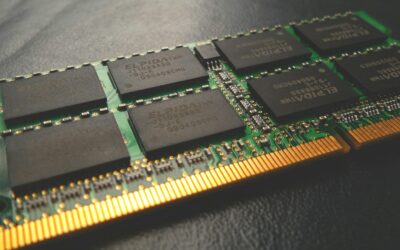
Other major cloud providers and AI companies are pursuing similar targets. Broadcom reported in 2024 that three unnamed hyperscale customers are each aiming to deploy over a million GPUs by 2027. The competition for limited chip manufacturing capacity is intensifying, which could affect pricing and availability for smaller enterprises and individual consumers. Memory components are already being reshaped by this AI demand, with manufacturers discontinuing certain configurations to focus on AI-optimized variants.
SpaceXAI is also exploring unconventional solutions, including plans to deploy an orbital data center system using a million satellites. While this remains in early concept stages, it illustrates how far companies are willing to go to secure additional computing capacity.
What to Watch Moving Forward
For consumers and small businesses, the key takeaway is that infrastructure spending at this scale will shape the GPU market for years. Expect continued supply constraints, rapid obsolescence cycles for older models, and pressure on pricing from companies competing for limited inventory. The company that wins the AI infrastructure race will likely be the one that solves the power problem most effectively, not necessarily the one with the fanciest chips.







Write Your Review
No reviews yet. Be the first to share your experience!