

AMD’s New Ultra-High-Performance Workstation Targets AI and Enterprise Users
AMD has announced the Threadripper Halo Station, a workstation positioned as the most powerful machine in its category. The announcement came at IFA 2026 and marks a significant development in high-end computing hardware for professionals working with large-scale AI models and intensive computational tasks.
Core Specifications and Performance Capabilities
At the heart of the Threadripper Halo Station sits the Threadripper Pro 9995WX, a 96-core processor built on AMD’s Zen 5 architecture. This chip delivers 192 threads and can boost to 5.4 GHz, featuring 384 MB of L3 cache and a 350W thermal design power rating. The processor draws on eight-channel memory architecture to support massive amounts of system RAM.
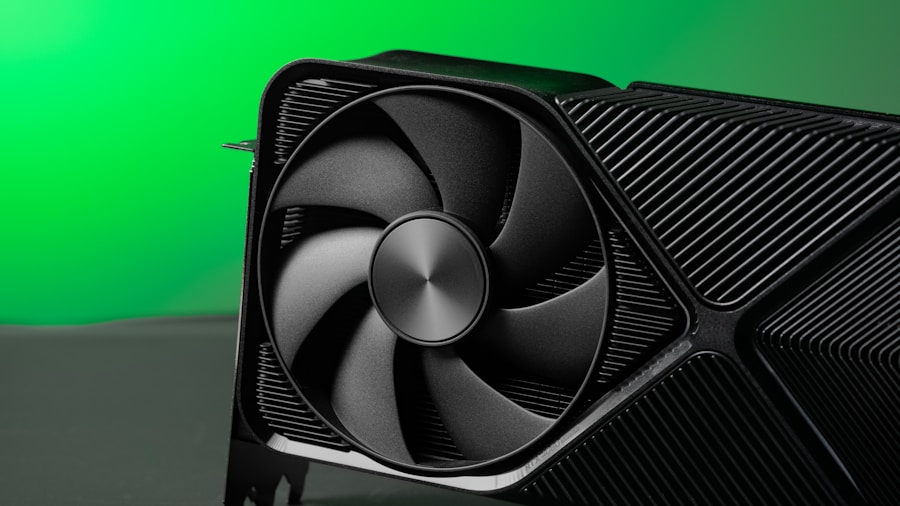
The workstation includes two liquid-cooled Instinct MI350P accelerators as standard, with potential expansion to four total units. Each accelerator contains 144 GB of HBM3E memory, bringing the baseline system to 288 GB of specialized high-bandwidth memory. The system also includes 2 TB of DDR5 RAM, representing the maximum capacity the processor platform can address. AMD has designed the cooling solution to handle the thermal output from both the processor and the accelerators, with each MI350P drawing up to 600W during operation.
This combination of components enables the workstation to run trillion-parameter models, making it suitable for advanced AI research, machine learning training, and other extreme-performance computing scenarios.
Pricing and Market Positioning
The Threadripper Halo Station will carry a substantial price tag. Core components alone, including the processor, memory, and dual accelerators, are estimated to exceed $100,000. The Threadripper Pro 9995WX processor alone costs between $11,000 and $12,000, while each MI350P accelerator is estimated at approximately $20,000. The 2 TB of DDR5 memory required for the system runs roughly $50,000 by itself. Fully configured systems with additional storage, power delivery, and cooling infrastructure could easily surpass $150,000.
This pricing positions the Threadripper Halo Station as an ultra-premium offering. For context, comparable workstation systems from other vendors, when maxed out with similar high-end components, have reached over $300,000. The Threadripper Halo Station appears designed to undercut those prices while delivering competitive performance.
What This Means for Potential Buyers
The Threadripper Halo Station is not a consumer product. Instead, it targets research institutions, AI development companies, and enterprises requiring bleeding-edge computational capability. If you work in machine learning, scientific research, or large-scale data processing, this machine represents current peak performance in a single-system form factor. However, you should also be aware that AMD CPUs face TPM security concerns requiring BIOS updates, so security protocols remain important even in high-performance systems.
AMD has not yet announced specific partners who will build and sell these machines. The company indicated that OEM partners will handle manufacturing and distribution, similar to how enterprise systems typically reach customers. This means availability and delivery timelines remain uncertain.
For buyers considering this category of workstation, the specifications demonstrate AMD’s commitment to competing in the enterprise and research computing market. The integration of Threadripper processors with Instinct accelerators in a unified tower design simplifies deployment compared to building custom server-based solutions. The liquid cooling system addresses one of the primary challenges when deploying high-power accelerators in traditional tower formats.
Performance Considerations
The 96 cores of the Threadripper Pro 9995WX provide substantial multithreaded performance for parallel workloads. The combination with dual MI350P accelerators, each containing 128 CDNA compute units, creates a system capable of handling both CPU-intensive and GPU-accelerated tasks simultaneously. The HBM3E memory on the accelerators enables faster data access patterns compared to traditional GDDR memory, which matters significantly when working with large models.
Buyers should note that this system targets specific workload categories. If your computing needs involve trillion-parameter AI models, advanced simulations, or large-scale data analysis, the performance-per-dollar ratio may justify the investment. For general workstation tasks or smaller-scale projects, less expensive alternatives would serve you better.
Looking Ahead
AMD has not announced a specific price or release date for the Threadripper Halo Station. Additional details about the system design and availability are expected to arrive as AMD’s OEM partners prepare their offerings. Buyers interested in this category should monitor announcements from major workstation manufacturers for specific configurations and delivery timelines. When you begin evaluation, verify that security patches have been applied to any system you purchase.








Write Your Review
No reviews yet. Be the first to share your experience!