

New Mini Workstation Brings AMD’s Latest AI Chip to Desktop Computing
Lenovo has unveiled the ThinkCentre X Ultra, a compact desktop system powered by AMD’s newest processor designed for artificial intelligence workloads. The machine showcases AMD’s commitment to bringing advanced computing power into smaller form factors, and it represents a significant shift in what mini PCs can deliver for professional and power users. This announcement comes as the market for specialized AI computing hardware intensifies, with multiple manufacturers racing to offer solutions that balance performance with physical space constraints.
Key Specifications and Design

The ThinkCentre X Ultra will feature up to an AMD Ryzen AI Max+ Pro 495 processor paired with an integrated AMD Radeon 8065S GPU. The system supports up to 128GB of LPDDR5x memory running at 8533 MT/s, which delivers faster data transfer compared to earlier generation memory modules. Storage options go up to 2TB of Gen5 NVMe SSD capacity, providing ample space for demanding applications and large datasets.
Physically, the system is remarkably compact at approximately 7.2 by 7.2 by 2 inches, making it comparable in size to some of the smallest desktop computers on the market. Despite its tiny footprint, Lenovo has packed in an impressive array of connectivity options. The front includes dual 10Gbps USB-C ports and a 3.5mm audio jack. On the rear, users will find DisplayPort 2.1 and HDMI 2.1 outputs, two additional 10Gbps USB-A ports, Thunderbolt 4 connectivity at 40Gbps, and a 10 Gigabit Ethernet connection. The presence of Thunderbolt 4 is particularly noteworthy on an AMD-based system, as this remains relatively uncommon on the platform.
What This Means for Buyers
The ThinkCentre X Ultra arrives in November 2026 with an expected starting price of $3,669. While this represents a significant investment, the hardware specifications justify the cost for users who need powerful AI and machine learning capabilities in a desktop environment. The integrated graphics approach eliminates the need for a separate discrete GPU in many scenarios, which streamlines both cost and power consumption.
One notable advantage of systems like this is their clustering capability. Lenovo states that up to four ThinkCentre X Ultra units can be networked together to handle larger AI models, multiple simultaneous agents, additional concurrent requests, or extended context windows. This modularity appeals to researchers, developers, and small teams who want to scale their computational power without investing in massive server infrastructure. When considering how memory speeds affect Ryzen CPU performance, the 8533 MT/s specification here demonstrates Lenovo’s attention to keeping data flowing efficiently through the system.
Software and Developer Tools
Lenovo will offer both Linux and Windows versions of the ThinkCentre X Ultra, addressing different user preferences and workflow requirements. The system comes bundled with the AMD Ryzen AI Developer Center, which includes pre-configured AI models, development tools, and example workflows to help users hit the ground running. This approach significantly reduces the initial setup complexity for developers transitioning to the new platform.
Thermal and Design Considerations
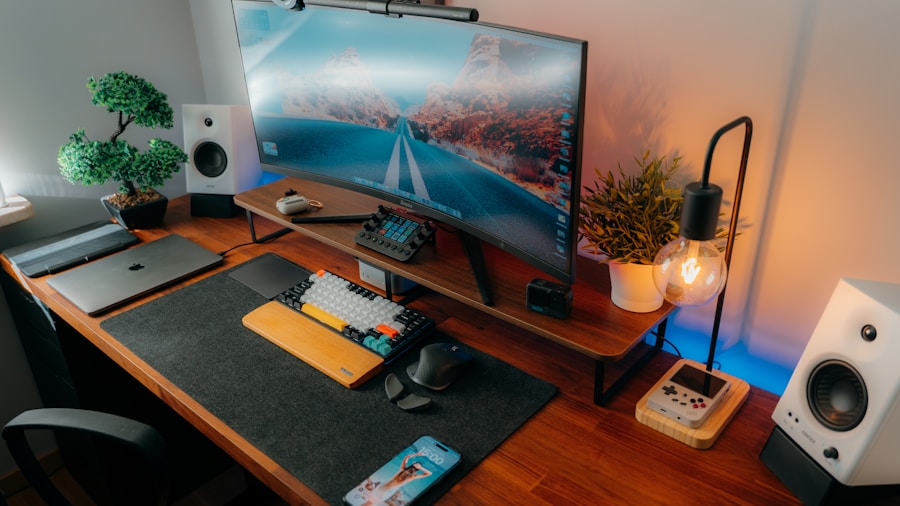
The compact chassis raises questions about thermal management. Fitting high-performance computing components into such a small enclosure requires careful engineering to ensure adequate cooling. Lenovo has added visual status indicators visible through the front air intakes, allowing users to monitor system health at a glance. For professionals considering how to maximize Ryzen CPU potential, understanding cooling capability becomes critical when evaluating this system for sustained workloads.
Competitive Landscape
The ThinkCentre X Ultra arrives at a moment when the mini PC and specialist desktop market is heating up. Nvidia plans to launch competing systems based on its RTX Spark architecture through multiple original equipment manufacturers this fall, signaling that major tech companies view compact AI-capable desktops as increasingly important. This competition benefits shoppers by driving innovation and potentially leading to price corrections as the market develops.
The decision to feature AMD’s processor architecture demonstrates confidence in the Ryzen platform for next-generation workloads. Whether you are a developer, data scientist, or creative professional, the ThinkCentre X Ultra represents an option worth monitoring as we approach its late 2026 launch window.







Write Your Review
No reviews yet. Be the first to share your experience!