

A creative tech enthusiast recently completed an ambitious project that highlights an emerging trend in computing: custom motherboard design to extend the lifespan of aging hardware. By designing and manufacturing his own motherboard using a Raspberry Pi Compute Module 5, the builder successfully transformed an obsolete HP ProLiant N40L micro-server into a functional modern machine. This kind of project raises important questions for consumers about hardware upgrades, repurposing options, and the value of older equipment.
The Challenge of Obsolete Hardware
The original N40L system, released roughly 15 years ago, was constrained by its era’s limitations. Its integrated motherboard and processor, built around an AMD Turion II chip, offered minimal processing power even when new. Beyond raw performance, the server lacked modern connectivity standards. It had no NVMe storage slots, relied entirely on USB 2.0 ports for peripherals, and consumed power inefficiently by today’s standards. For anyone still operating such a machine, these shortcomings made day-to-day computing frustrating and upgrades impossible through conventional means.
Why Custom Motherboards Matter

Rather than discarding the N40L chassis and components, the builder took advantage of open-source hardware documentation to create a custom motherboard tailored to the case. Using the Raspberry Pi Compute Module 5 as the foundation, he designed a PCB that incorporated modern features the original system never had. The result included an NVMe storage slot for faster boot and load times, dual USB 3.0 Type-A ports for contemporary peripherals, and a single HDMI output for display connectivity. This approach demonstrates that even as manufacturers release advanced motherboards with cutting-edge features, consumers can still extract value from older hardware through creative customization.
The Design and Engineering Process
The custom motherboard design required meticulous attention to detail. The builder began by creating a 3D printed prototype to verify that all port locations and mounting holes would align correctly within the original N40L case. He then refined the design by optimizing the number and placement of connectors, deciding to use a single HDMI port rather than multiple video outputs. One critical aspect of PCB design involved matching trace lengths on the circuit board to prevent timing issues that could cause instability or data corruption. The final board featured a distinctive yellow-and-black color scheme, adding visual appeal to an otherwise functional component.
What This Means for Consumers
This project has several implications for shoppers considering their own hardware decisions. First, it demonstrates that aging systems need not be landfill bound. Second, it shows that modern components like the Raspberry Pi Compute Module can deliver performance that vastly exceeds older server-grade hardware while consuming far less power. A contemporary Raspberry Pi vastly outperforms the original Turion II processor while drawing a fraction of the electricity.
For environmentally conscious consumers, projects like this highlight the potential for extending hardware lifecycles through repair and customization rather than replacement. As memory and component shortages continue to reshape how manufacturers design motherboards and devices, the ability to upgrade or repair existing equipment becomes increasingly valuable.
Modern Motherboard Standards and Compatibility
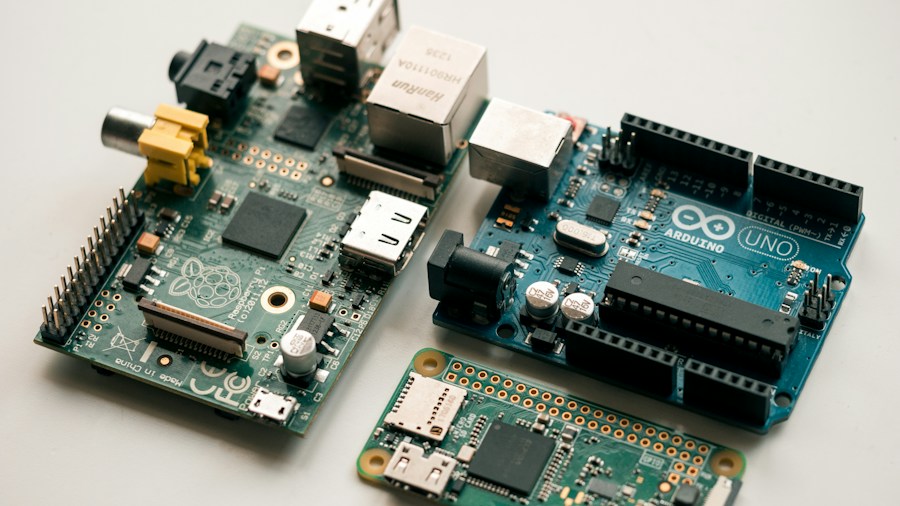
The Raspberry Pi Compute Module 5 itself is identical in functionality to a standard Raspberry Pi 5, but without built-in ports. This modular design intentionally encourages users to create custom I/O boards tailored to their specific needs. While Raspberry Pi provides a standard I/O board for typical users, enthusiasts can leverage the open-source schematics to build variations. The builder’s custom approach follows this philosophy, resulting in a motherboard perfectly suited to the ProLiant chassis rather than forcing an off-the-shelf solution to fit awkwardly.
Testing and Real-World Results
Remarkably, the custom motherboard functioned correctly immediately after assembly. Subsequent testing verified that USB and Ethernet connectivity met specifications. The system booted successfully into the case, demonstrating that thoughtful engineering and attention to electrical requirements paid off. The builder did leave room for future enhancements, noting that additional work could connect the original hard drive bay connector for expanded storage options.
For shoppers evaluating new latest motherboard releases and innovations, projects like this underscore the importance of understanding your actual computing needs. While cutting-edge motherboards offer premium features, older systems may have significant remaining value if upgraded thoughtfully. The key takeaway is that hardware longevity depends on adaptability, and consumers who understand their options can make smarter purchasing and upgrade decisions.



Write Your Review
No reviews yet. Be the first to share your experience!