

Intel executives are signaling a major shift in how the industry will approach motherboard sockets and platform design. According to Robert Hallock, vice president and general manager of Intel’s enthusiast channel business, the PC market is splitting into two distinct consumer segments with very different spending power. What started as rising component costs has evolved into what Hallock describes as a “tale of two kingdoms,” and the solution may involve separate socket standards for mainstream and premium buyers.
The Market Divide: Premium vs. Mainstream
The current PC market is experiencing stark polarization. Consumers with substantial discretionary budgets can absorb rising costs from memory shortages, supply chain inflation, and component price increases. Everyone else is struggling. Mainstream and budget-segment products are taking the biggest hit, while the enthusiast and premium markets remain relatively stable. Some high-end segments are even seeing growth despite overall industry challenges.
This division isn’t theoretical. Gigabyte recently launched graphics cards exceeding $5,000, while Asus demonstrated anniversary editions featuring $3,300 bundles and $6,000 GPUs. In that context, an extra $300 or $400 for upgraded memory barely registers. However, these ultra-premium products represent only a tiny fraction of total PC sales, leaving manufacturers scrambling to serve the much larger mainstream audience without going bankrupt.
The Socket Solution Taking Shape
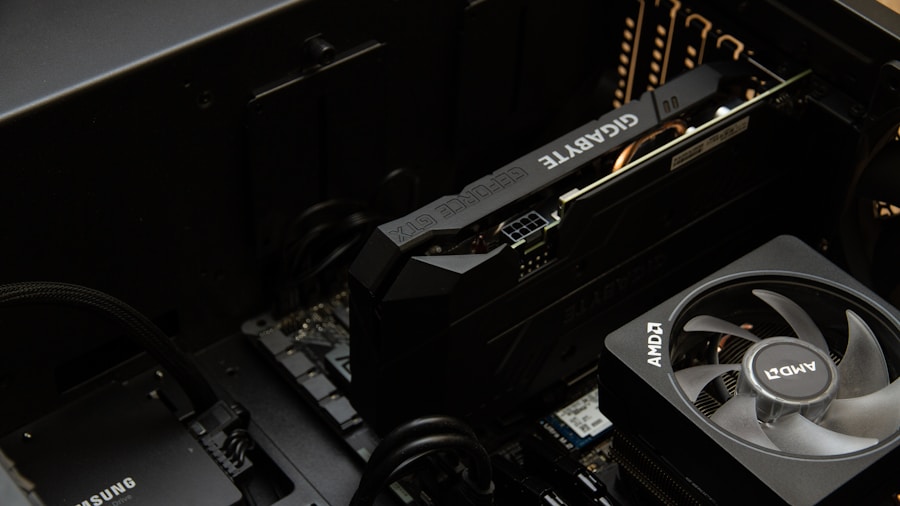
To address this challenge, Hallock indicated that the industry will likely adopt a two-socket strategy across manufacturers, not just at Intel. A dedicated mainstream socket would handle budget and mid-range systems, while a separate premium socket would serve enthusiasts and high-end buyers. This approach would allow companies to control supply chain costs and simplify product lineups for each market segment.
“You’re going to have to make some concessions in your product stack, and that’s purely to control costs and give people an option that they can actually afford,” Hallock explained. Without such differentiation, mainstream platforms risk becoming completely unaffordable for average consumers.
For Intel specifically, this appears to mean continuing LGA 1700 for mainstream platforms while introducing LGA 1954 for enthusiast-class systems. Intel’s upcoming Nova Lake processors will use the LGA 1954 socket and represent the company’s push into the premium segment. Meanwhile, Raptor Lake will remain available for years as the core mainstream offering, providing a lower-cost entry point for budget-conscious buyers.
Why This Matters Now

The timing isn’t accidental. RAM and NAND shortages, combined with persistent supply chain inflation, show no signs of abating soon. Rather than waiting for prices to stabilize, manufacturers are restructuring their entire platform approach. Recent moves to resurrect older memory standards demonstrate that companies are already taking steps to reduce system costs where possible.
Intel’s own recent actions reflect this strategy. Arrow Lake Refresh chips sold at significantly discounted prices, with some models dropping to $155 in limited-time sales. AMD has re-released previous-generation processors like the Ryzen 7 5800X3D and introduced the 7700X3D specifically to provide affordable high-performance options. These moves are temporary patches while the industry implements longer-term socket divisions.
What Shoppers Should Expect
If this socket split happens as indicated, buyers will face clearer choices but more complex decision-making. A mainstream socket system might offer solid gaming and productivity performance at accessible prices, while premium socket platforms would command higher costs but deliver cutting-edge features, better overclocking potential, and advanced technologies like Intel’s rumored bLCC 3D V-Cache technology.
When evaluating motherboards, consumers should understand that this division isn’t about performance differences alone. It’s about making computing accessible across different budget tiers. Mainstream platforms won’t disappear, they’ll simply become distinctly separate from premium enthusiast offerings rather than sitting awkwardly in the middle of unified platforms.
The key takeaway: don’t expect one-size-fits-all socket solutions anymore. The industry is moving toward explicit segmentation, with each socket targeting specific customer segments and price points. This could actually benefit budget buyers by ensuring manufacturers build dedicated products for their needs rather than cutting features from expensive flagship designs.










Write Your Review
No reviews yet. Be the first to share your experience!