

The Gap Between Specs and Real-World AI Performance
Enthusiasts dreaming of running cutting-edge open-source AI models locally often focus on one metric: VRAM capacity. But recent hands-on testing reveals that graphics card memory alone tells only half the story. When researchers benchmarked Alibaba’s Qwen 3.8 27B model across multiple platforms, including Nvidia’s RTX lineup, they discovered that software bottlenecks and inference engine limitations can severely undercut even the most powerful hardware.
The Qwen 3.8 27B model arrived with significant buzz among local AI hobbyists. At roughly 17GB in four-bit quantized form and offering built-in multimodal capabilities, it seemed like a perfect fit for high-end consumer graphics cards. Yet what looked impressive on paper performed far differently in practice, with performance depending heavily on which inference engine users chose and how they configured their systems.
RTX 5090: Muscle Meets Software Constraints
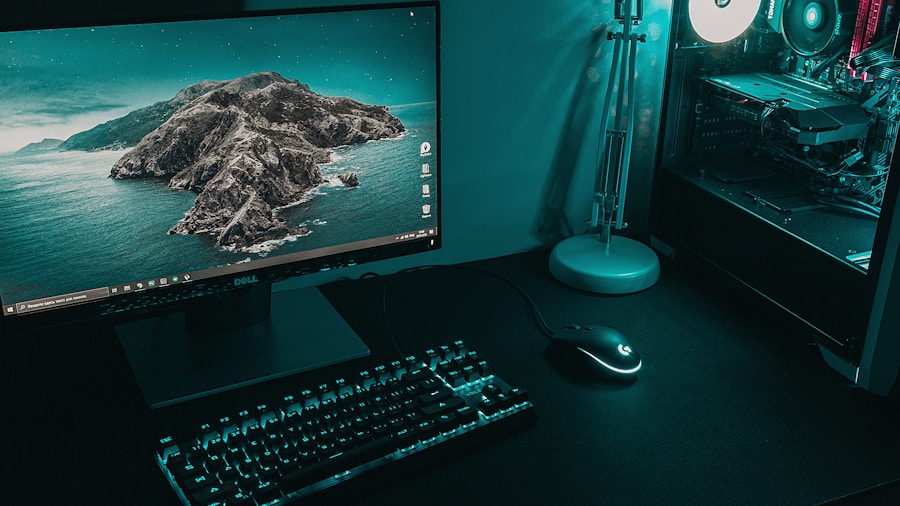
Nvidia’s flagship RTX 5090 boasts 32GB of GDDR7 memory and 1.8 TB/s of bandwidth, making it the obvious choice for dense model inference. However, initial testing with the popular llama.cpp software showed alarming results: time-to-first-token stretched to approximately 30 minutes at longer context lengths, far below expectations. This suggested the problem lay not with the hardware but with how the software interacted with it.
Switching to production-grade inference engines like vLLM and SGLang revealed the trade-off landscape. A single RTX 5090 with vLLM could run the model, but only with a severely limited 32K context window instead of the native 262K. Decode performance without multi-token prediction hovered around 20 tokens per second, adequate but uninspiring for hardware at this price point. Enabling the full context window required either a graphics card with more than 32GB of VRAM or a second RTX 5090, pushing total system cost above $13,000.
SGLang performed roughly three times faster than vLLM on a single card and extracted slightly more usable context, yet even SGLang needed a second GPU to unlock the model’s full potential. The lesson: owning an RTX 5090 does not automatically guarantee seamless local AI performance at maximum specs. Be prepared to experiment with different inference engines and accept context limitations on a single card.
RTX 4090 and RTX 3090: Older Cards Face Hard Limits
Many enthusiasts rely on the 24GB RTX 4090 and RTX 3090 due to their relatively large memory pools and favorable pricing on the used market. These cards can technically load Qwen 3.8 27B’s weights but require compromises immediately. Testing showed that context depth had to stay below 112K tokens to avoid running out of memory, and both cards needed every byte of VRAM dedicated to the AI workload. Attempting to run a desktop environment on the same card became impractical, forcing users to either set up a headless server or maintain a separate display GPU.
Interestingly, llama.cpp exhibited the same performance cliff at long contexts on the RTX 4090 that plagued the RTX 5090, but the RTX 3090 proved unaffected, suggesting a software bug rather than a hardware limitation. Given the memory constraints these older cards face, vLLM and SGLang would likely struggle even more than on a single RTX 5090, making multiple cards necessary for serious work.
Alternatives Worth Considering
Nvidia’s DGX Spark, despite having only 27 GB/s of memory bandwidth, delivered competitive results thanks to its strong prefill performance and support for multi-token prediction. A single Spark remains available for roughly $5,000 and supports both SGLang and vLLM, potentially offering better value than dual consumer RTX cards for users willing to invest in enterprise hardware.
Apple’s M4 Max Mac Studio and AMD’s Ryzen AI Halo presented more mixed results. The Mac Studio struggled with prompt processing speed despite abundant memory bandwidth, while the Ryzen AI Halo suffered from both low memory bandwidth and poor prompt-processing performance, making it the least suitable option for this dense model among platforms tested.
What Shoppers Should Take Away
The overarching message is clear: raw specifications do not predict performance. Users considering expensive local AI hardware should understand that delivered results depend on inference engine selection, software optimization, and system configuration. Benchmark reviews from actual testing environments prove far more reliable than comparing VRAM capacity alone. Before investing $5,000 to $15,000 in local AI hardware, weigh the cost against cloud-based alternatives, which often deliver faster responses and broader model access at competitive rates.
Anyone implementing local AI should be prepared to experiment with different inference engines and accept potential context limitations. Keep expectations realistic, prioritize software compatibility alongside hardware specs, and remember that beware of counterfeit GPU scams targeting buyers seeking premium graphics cards. For enthusiasts committed to local deployment, careful benchmarking and a willingness to troubleshoot will ultimately determine success.


Write Your Review
No reviews yet. Be the first to share your experience!