

Intel is signaling a significant shift in strategy by exploring a return to memory chip manufacturing, a business the company largely exited decades ago. In recent comments, Intel CEO Lip-Bu Tan revealed that the semiconductor giant is actively investigating new memory architectures and ways to integrate RAM directly with processors. This move marks a notable pivot for the chipmaker and could reshape how future computers are designed and built.
Why Intel is Eyeing the Memory Market
The memory business has become increasingly attractive to major players in the semiconductor industry. Demand for RAM has surged in recent years, driven largely by artificial intelligence workloads and data center expansion. Prices for DRAM modules have climbed significantly as a result, making memory manufacturing a lucrative and strategically important segment. Tan has acknowledged that he previously viewed memory production as a commodity business, but now sees it as an area ripe for innovation and differentiation.
Intel has the historical expertise to support such a venture. The company pioneered DRAM manufacturing back in the late 1960s and more recently developed Optane memory technology. To strengthen its capabilities, Intel has recruited Seok-Hee Lee, a veteran engineer from SK Hynix, one of the world’s largest memory manufacturers. These moves suggest Intel is serious about re-establishing itself as a meaningful player in memory production.
The CPU and Memory Integration Strategy
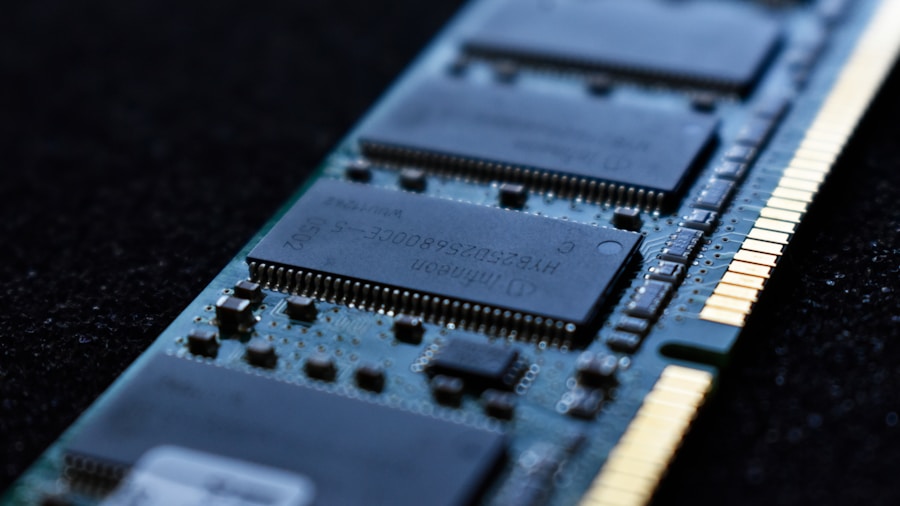
The most intriguing aspect of Intel’s plans involves stacking memory directly on top of processor dies. Intel’s strategy focuses on creating combined CPU and memory modules that could revolutionize computer design. Such an approach would offer substantial benefits: reduced physical footprint, lower latency between the processor and memory, and simplified supply chain management for laptop and desktop manufacturers.
This concept is not entirely new. Intel’s recent Lunar Lake platform already integrates memory within the same package as the CPU, proving that the technology is feasible. However, a full implementation of stacked memory architecture would take the integration much further, potentially eliminating the need for separate memory modules entirely in some applications. For laptop makers, this would mean no longer sourcing DRAM from third-party vendors and having more control over their final products.
What This Means for Computer Buyers
If Intel successfully develops integrated memory solutions, the implications for consumers could be substantial. Future Intel processors with enhanced memory capabilities could offer better performance and efficiency compared to traditional designs. Thinner and lighter laptops become possible when memory does not require dedicated space on the motherboard. System builders would benefit from simplified assembly processes and more predictable component compatibility.
However, buyers should not expect these innovations to arrive immediately. Intel currently lacks the manufacturing infrastructure to produce memory at scale. Building the necessary fabrication plants requires substantial capital investment and time. Additionally, existing memory manufacturers have already sold out their near-term production capacity, indicating that global demand far exceeds current supply levels. Intel would need to construct entirely new facilities before ramping up any serious memory production.
The Larger Context

Intel’s interest in memory integration reflects broader trends in semiconductor design. As processors continue to evolve, modern CPU strategies emphasize tight integration of multiple components within a single package. The company faces intense competition from AMD and other rivals who are also exploring advanced packaging techniques. By combining memory with processors, Intel could differentiate its offerings and capture additional value in an increasingly competitive market.
Tan has emphasized that these efforts remain in the exploration phase and that significant details are not yet available for public discussion. The company appears to be taking a measured approach, evaluating architectural possibilities before committing to specific product timelines. This suggests that any consumer-facing benefits from Intel’s memory ventures likely remain several years away.
Bottom Line for Shoppers
Intel’s potential return to memory manufacturing represents a meaningful strategic pivot with long-term implications for computer design and performance. While immediate consumer impact is unlikely, the developments are worth monitoring. Current computer buyers should focus on available options today rather than waiting for uncertain future offerings. However, those planning purchases several years out may benefit from memory-integrated processors if Intel successfully executes its vision. Keep an eye on Intel’s announcements regarding manufacturing facility expansion and memory technology progress as indicators of when such products might realistically reach the market.






Write Your Review
No reviews yet. Be the first to share your experience!