

Enterprise SSDs Face Extended Supply Crunch Despite New Manufacturing Moves
The market for enterprise solid-state drives is under pressure, and that pressure will likely persist for the foreseeable future. SK hynix and its subsidiary Solidigm have announced major manufacturing plans to address long-term demand, but these initiatives will not relieve current shortages anytime soon. Understanding what is happening in the production pipeline matters if you rely on enterprise storage solutions or are planning infrastructure upgrades.
Two-Part Strategy: Mature Production Overseas, Advanced Nodes at Home
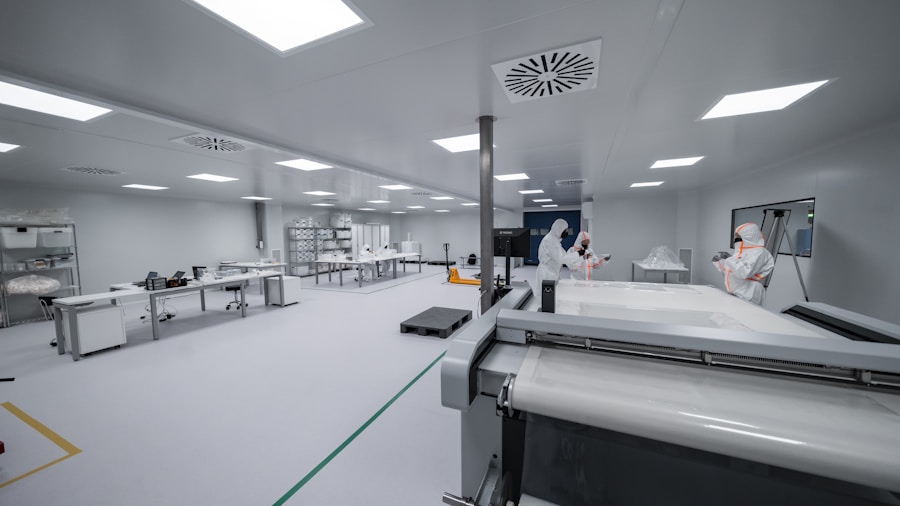
SK hynix is pursuing a strategic split in its manufacturing approach. The company will keep mature-node NAND flash production in China through Solidigm’s facilities while investing heavily in next-generation memory manufacturing at home in South Korea. This separation allows the company to follow international restrictions on advanced semiconductor equipment while still expanding overall capacity.
Solidigm has reportedly restarted work on its second factory in Dalian, China, after a four-year pause. According to Korean media reports, the facility’s building is complete and equipment installation could begin as early as November 2026, with full production ramping in the first half of 2027. If these timelines hold, the new line would add roughly 50,000 wafer starts per month to the existing Dalian Fab 1, which currently produces around 100,000 wafers monthly. That represents a 50 percent boost to the company’s Chinese flash manufacturing capacity.
The Dalian expansion focuses specifically on mature-node NAND, the workhorse technology behind mainstream enterprise storage. This targeted approach will help Solidigm increase output of the high-capacity drives that data centers depend on while adhering to export control regulations.
Massive Domestic Investment in Advanced Memory
At the same time, SK hynix announced a ₩54 trillion investment, approximately $38 billion, in its South Korean manufacturing sites in early August. The bulk of this spending targets two facilities: ₩35.2 trillion for the Yongin Y2 plant, which will produce advanced DRAM and high-bandwidth memory, and ₩19.1 trillion for the Cheongju M17 fab dedicated to next-generation NAND and enterprise SSDs.
The M17 facility represents a turning point for the company. It will specialize in creating high-layer, high-density flash memory specifically engineered for large-scale artificial intelligence applications. However, construction and equipment deployment will take considerable time. The first cleanroom is not expected to be operational until late 2028, with commercial production beginning in 2029 or later.
Enterprise SSD Demand Surging While Supply Lags
The urgency behind these expansion plans becomes clear when examining market demand. Enterprise SSDs now account for approximately 48 percent of global NAND shipments as of the second quarter of 2026, nearly double the 26 percent share from a year earlier. Research firms expect this share to grow further, with enterprise storage absorbing more than half of all NAND bits by the end of 2026.
Solidigm has captured particular momentum in this segment, posting roughly 40 percent quarter-over-quarter growth in bit shipments. That success illustrates why the company is expanding capacity dedicated to this product category. Yet despite strong demand, SK hynix Group maintains a distant second-place position in global NAND revenue, holding 17.6 percent market share compared to Samsung’s commanding 31.6 percent lead.
Current Shortages Will Persist Through 2027

Here lies the critical challenge for consumers and businesses: new capacity will not arrive when it is needed most. Since the Dalian Fab 2 expansion will not begin producing until at least the first half of 2027, and the Cheongju M17 facility will not reach commercial output until 2029 or later, enterprise SSD supply constraints will remain tight throughout the next several years. As noted by market analysts, Solidigm’s expansion efforts target the mature-node enterprise market, where demand continues accelerating.
This timing mismatch has real consequences. Organizations planning data center upgrades or storage infrastructure deployments should anticipate limited availability and elevated pricing. The separation of mature-node production to China and advanced-node manufacturing to South Korea makes strategic sense for regulatory compliance, but it does not address the immediate supply shortage that buyers face right now.
What This Means for Storage Buyers
For enterprise customers, the takeaway is straightforward: allocate budget for higher storage costs in the near term. Emerging SSD technologies promise greater capacities, but the journey from announcement to volume production remains lengthy. Plan infrastructure purchases carefully, consider longer lead times, and evaluate whether you can defer non-critical upgrades until supply normalizes in 2027 or beyond.
SK hynix and Solidigm are making the right long-term moves to secure their market position and meet growing AI-driven demand for advanced storage. Yet buyers navigating the gap between today and when new production lines turn on should prepare for continued scarcity and premium pricing on enterprise SSDs.









Write Your Review
No reviews yet. Be the first to share your experience!