

Major EV Charging Company Announces Massive GPU Rollout Across the Country
An electric vehicle charging firm called Xeal has announced an ambitious plan to install over 100,000 Nvidia GPUs at more than 1,600 existing EV charging locations nationwide. This deployment marks a significant shift in how computing power gets distributed across the United States, and it has real implications for consumers interested in AI services, edge computing performance, and the future of distributed technology networks.
Xeal’s initiative centers on creating what the company calls an “edge inference compute network using idle EV charging capacity.” In simpler terms, the company has recognized that its EV charging stations operate at less than 10 percent of their permitted electrical capacity most of the time, leaving vast amounts of available power unused. Rather than let that infrastructure sit idle, Xeal is developing specialized containers called Latient Pods that house Nvidia GPUs and tap into this existing power supply.
What Are Latient Pods and How Do They Work
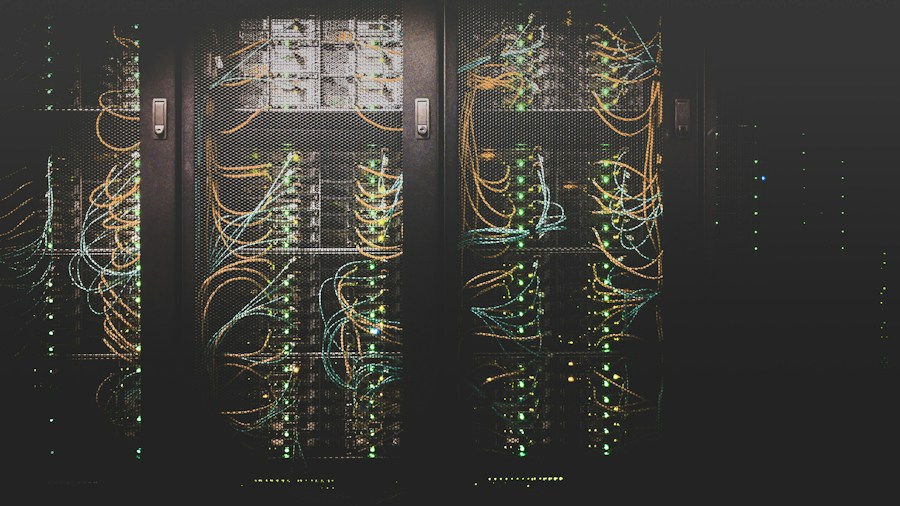
Each Latient Pod can hold up to 48 Nvidia Hopper or Blackwell Ultra GPUs. These are premium, high-performance chips designed for AI inference tasks. The pods are self-contained units that require no water cooling, operate quietly at under 65 decibels, and can be installed and running within hours at a charging location.
The design emphasizes practicality for real-world deployment. The pods feature weatherproof NEMA 4 enclosures built to withstand outdoor conditions, and they draw power from the existing electrical infrastructure at charging stations. Because EV chargers typically operate well below capacity during off-peak hours, this arrangement makes efficient use of infrastructure that has already been built and permitted.
Why This Matters for Computing Speed and Accessibility
Traditional data centers that power AI services and inference workloads are often located far from the users who need them. This distance introduces latency, or delay, in processing requests. Xeal’s distributed network aims to solve this problem by positioning compute power closer to where users actually are, throughout metropolitan areas. The company claims its Latient Pods can deliver sub-20-millisecond latency, a dramatic improvement over distant data centers.
For shoppers and businesses, lower latency means faster responses from AI applications, smoother video processing, quicker data analysis, and better real-time performance. Real estate technology platforms, autonomous vehicle systems, and interactive AI tools all benefit from reduced delays. As GPU demand continues to reshape the technology landscape, distributed computing approaches like this one may become standard practice.
The Scale of This Deployment
With 1,600 existing EV charging sites and plans to deploy 100,000 GPUs total, Xeal is essentially creating a nationwide grid of distributed computing power. The math suggests multiple pods at some locations or expansion to approximately 2,100 sites to accommodate all planned units. This represents one of the largest coordinated GPU deployments outside of traditional hyperscaler data centers.
Nvidia has publicly praised the initiative as an innovative way to bring low-latency inference capabilities closer to end users while making better use of infrastructure that is already in place. The company recognizes that this approach addresses a genuine bottleneck in the current computing landscape: the shortage of available compute capacity and the difficulty of siting new data centers due to permitting and grid interconnection challenges.
Timeline and Security Considerations

Xeal plans to have the first Latient Pod online by the end of the year, with broader rollout expected to follow. However, the deployment raises important security concerns. Each pod containing 48 high-end Nvidia GPUs represents significant monetary value, potentially exceeding two million dollars per unit. EV charging stations have already been targeted by thieves in recent years, and this GPU infrastructure will likely require robust physical and digital security measures to protect against theft and unauthorized access.
For charging station owners, Xeal offers financial incentives. Site hosts can receive rental income or ancillary revenue from hosting pods, and the company covers all power costs as a tenant pass-through arrangement. This could add up to one million dollars in property value with minimal investment required from the property owner.
What This Means for Consumers and Businesses
This rollout signals that edge computing and distributed GPU networks are moving from theoretical concepts to practical, large-scale reality. GPU technology continues to evolve and expand into new applications beyond traditional gaming and workstations. Consumers may benefit through faster AI-powered applications, improved video streaming quality, and quicker response times in cloud-based services that rely on distributed inference.
Businesses that develop AI applications, require real-time data processing, or operate in autonomous vehicle technology stand to gain access to compute capacity that was previously unavailable at the edge. The entire approach demonstrates how existing infrastructure designed for one purpose, EV charging, can be repurposed to meet emerging computing demands when approached creatively.
This deployment is worth monitoring as it unfolds over the coming months and years, as it may reshape how computing power becomes available across the country.






Write Your Review
No reviews yet. Be the first to share your experience!