

In a major development for data center efficiency, Cloudflare has successfully recovered approximately 100TB of RAM across its global infrastructure by redesigning how data is stored in memory. The company accomplished this feat without adding any physical hardware to its servers, instead relying on intelligent software optimization that has wide-ranging implications for how memory costs may trend in the coming years.
What Cloudflare Accomplished
Cloudflare’s 1.1.1.1 DNS resolver holds more than 250 billion cached DNS entries at any given time. The company’s engineering team identified that the data structure used to store each cache entry contained unnecessary overhead. By redesigning five core components of the caching system written in Rust, engineers reduced the size of each cached entry from 953 bytes down to just 420 bytes. This seemingly modest change had enormous consequences when multiplied across a quarter-trillion cached items.
The optimization involved several technical changes: replacing flexible data containers with fixed-size structures, consolidating record lists into single buffers, eliminating duplicate domain names that could be reconstructed on demand, and storing record data more compactly. These adjustments not only freed up massive amounts of RAM but also improved performance, with cache lookups becoming 19 percent faster and insertion throughput increasing by 43 percent.
Why This Matters for Memory Prices
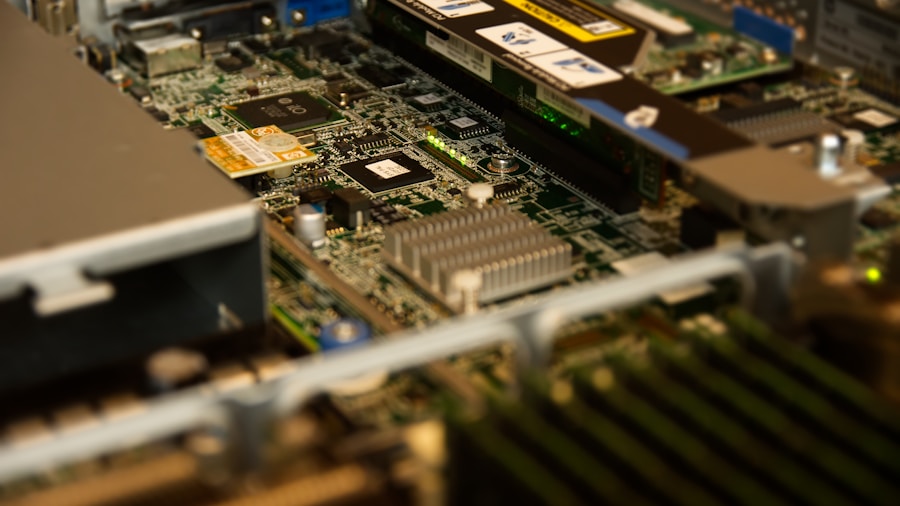
The recovered 100TB of memory is equivalent to the combined capacity found in approximately 130 of Cloudflare’s largest servers, each equipped with 768GB of DDR5 memory. When factored against current server-grade DDR5 pricing, this translates to roughly $3.9 million in avoided hardware expenditure. This savings arrives at a critical time, as memory costs continue climbing at unsustainable rates.
The timing of Cloudflare’s project highlights an industry-wide problem that consumers and businesses alike are feeling. For years, developers and companies could afford to be wasteful with memory because it was cheap and readily available. When DDR5 prices skyrocketed over 1000 percent in a single year, the economics of that approach suddenly changed. Large-scale operations like Cloudflare now face pressure to optimize code rather than simply throw more hardware at problems.
What This Reveals About the Hardware Market

This project is not an isolated case. Cloudflare completed a similar memory reclamation effort just a year earlier when it rewrote its entire request-handling layer in Rust, demonstrating a broader trend toward efficiency-focused engineering. The company has consistently made hardware choices prioritizing efficiency, including transitions to more powerful processors that require fewer overall server instances.
What’s particularly significant is that Cloudflare does not plan to pocket these savings by downsizing its server configurations. Instead, the company will reinvest the freed memory into larger DNS caches, which improves service quality by increasing cache hit rates and reducing upstream traffic to authoritative nameservers. This approach shows that efficiency gains can flow directly into better service rather than pure cost reduction.
The broader implication is that companies can no longer ignore software optimization when hardware costs rise. The days of unlimited memory abundance that allowed developers to bypass careful coding are ending. When DDR5 memory hits peak pricing levels, even a single wasted byte per cached entry becomes catastrophically expensive at scale. This pressure will likely drive industry-wide improvements in how software uses memory resources.
What Shoppers Should Know
While Cloudflare’s DNS optimization primarily affects enterprise infrastructure, the cascading effects will eventually reach consumer markets. As companies are forced to optimize software rather than simply expand hardware, they may stabilize their infrastructure costs, which can help temper memory price increases. Additionally, more efficient software means better performance on existing hardware, reducing the pressure on consumers to constantly upgrade their RAM.
Consumers should also recognize that when major technology companies report efficiency breakthroughs, it often signals that the industry is acknowledging a real problem with how resources are being used. The fact that such a high-profile optimization was necessary suggests that many other systems may still be running inefficiently, with memory waste baked into their architecture.
This moment represents a turning point where companies finally recognize that optimizing code is more cost-effective than expanding hardware budgets. For shoppers watching memory prices, this shift in industry priorities is encouraging news, even if changes take time to fully materialize in consumer pricing and availability.










Write Your Review
No reviews yet. Be the first to share your experience!