

Intel has unveiled significant details about its next-generation Xeon 7 processor, codenamed Diamond Rapids, marking a major shift in server CPU design for 2027. The announcement comes as the company aims to regain competitiveness in the demanding data center market where processor innovation continues to accelerate.
What Diamond Rapids Brings to the Table
The new Xeon 7 lineup will feature up to 256 performance cores paired with 1.28 GB of last-level cache, delivering substantial compute density for server workloads. Diamond Rapids uses Intel’s enhanced 18A-P process node, which boosts performance by 9 percent compared to the previous 18A generation or reduces power consumption by 18 percent while maintaining the same performance levels.
The architecture introduces a modular design using Compute Building Blocks, or CBBs, that organize cores into chiplets. Each chiplet houses up to 16 cores, and up to four chiplets can stack within a single CBB. A complete Diamond Rapids chip includes four CBBs containing 16 core chiplets total, along with centralized fabric hub tiles for memory and input/output operations.
Major Design Changes Mean Better Efficiency
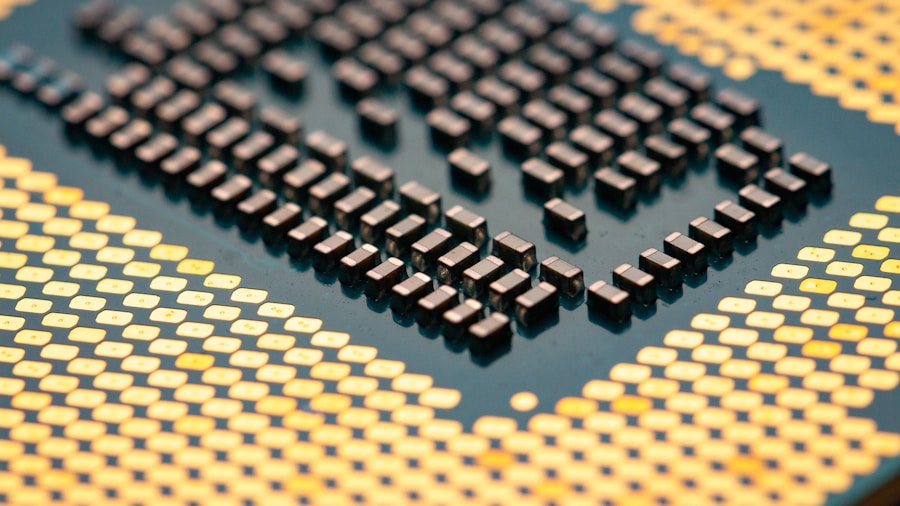
Unlike previous generations, Diamond Rapids takes a completely redesigned approach to chip layout. Memory and I/O components have shifted from distributed placement to a centralized hub design positioned in the middle of the processor. This reversal differs significantly from the predecessor Granite Rapids and actually borrows design philosophy from competitor AMD’s EPYC evolution.
This centralization creates thermal benefits by pushing the hottest components toward the chip edges, reducing hotspot concentration in the center. For buyers concerned about cooling costs in large data center deployments, this could translate to more efficient thermal management and lower operational expenses.
Diamond Rapids also introduces an on-die snoop filter that maintains cache coherency more efficiently than previous designs. By integrating this directory function directly on the processor rather than relying on external memory controllers, Intel reduces latency and improves overall system responsiveness for demanding workloads.
Memory and Connectivity Upgrades
The new Xeon supports 16 memory channels with data rates reaching 8,000 MT/s for standard DDR5 or 12,800 MT/s for advanced MRDIMMs. This represents a significant increase from the 12-channel limit of previous Granite Rapids models, enabling faster data movement for bandwidth-hungry applications.
Connectivity options have expanded considerably. Diamond Rapids provides 128 lanes of PCIe 6.0 support plus CXL 3.0 and UPI 3.0 interconnects in flexible configurations. This gives system builders the ability to choose the right connectivity mix for their specific deployment needs, whether emphasizing GPU support or processor-to-processor communication.
Interestingly, Intel chose to use UCIe-S interconnect technology instead of its own EMIB packaging for connecting fabric hubs to compute blocks. According to Intel, this decision provides lower latency and more uniform access across longer distances, proving more practical for Diamond Rapids’ distributed architecture than more advanced packaging techniques would have been.
Advanced CPU Instructions and Software Improvements

Diamond Rapids marks Intel’s move to AVX 10.2 instruction support across both performance and efficiency cores. This unified instruction set enables developers to write vectorized code that executes efficiently on all core types without separate compilation paths. The processor also supports APX, Intel’s modernized extension that doubles general-purpose registers from 16 to 32, potentially delivering performance improvements without requiring code modifications.
While the CPU market continues evolving with diverse instruction set approaches, Diamond Rapids represents Intel’s commitment to standardized x86 instruction sets that server software already relies upon.
What This Means for Buyers
The 2027 arrival timeline gives enterprises time to plan upgrade cycles. Organizations evaluating current server purchases should consider whether Diamond Rapids’ improvements justify waiting or whether existing options meet immediate needs. The enhanced memory bandwidth and centralized I/O design particularly benefit workloads handling large datasets or requiring intensive accelerator support.
The APX and AVX 10.2 support will primarily benefit applications recompiled to use these instructions. Legacy applications will continue running but won’t automatically gain performance benefits. Just-in-time compiled software like web applications could see improvements once runtime environments add support.
One notable limitation compared to future generations: Diamond Rapids lacks simultaneous multithreading, which Intel plans to reintroduce in the following server generation. For threaded workloads expecting SMT support, this represents a temporary step backward.
As the data center landscape shifts toward AI inference and agentic computing workloads, Diamond Rapids positions Intel as a competitive alternative to AMD with modern design principles and aggressive process technology. Whether this proves sufficient to overcome recent market challenges remains to be seen, but the technical foundation appears sound. Organizations planning major infrastructure investments should stay informed as more technical details emerge before launch.









Write Your Review
No reviews yet. Be the first to share your experience!