

SpaceX Commits to Nvidia Vera CPUs for Grok AI and Orbital Computing
Nvidia announced a significant partnership with SpaceXAI that will deploy the company’s 88-core Vera processors across two major applications: powering the orchestration of Grok’s AI agents in data centers and, beginning in the fourth quarter of 2027, operating aboard SpaceXAI’s Starmind satellite network. The deal represents a landmark moment in CPU deployment, making SpaceXAI the second major hyperscaler, after Meta, to adopt Vera outside of full Vera Rubin rack configurations.
The Vera chip has been engineered specifically to handle the computational demands of agentic AI workloads. Unlike traditional CPU usage patterns, AI agent systems spend significant runtime off the GPU, calling tools, querying databases, and parsing results between inference passes. By optimizing the CPU for these orchestration tasks, Vera allows GPUs to operate at peak efficiency rather than sitting idle waiting for data processing to complete. This architectural approach addresses a persistent challenge in large-scale AI deployments where CPU bottlenecks waste expensive GPU capacity.
Performance Claims and Market Competition

Nvidia claims that Vera completes agentic tasks, reinforcement learning jobs, and data processing operations up to 1.8 times faster than traditional x86 processors. However, these performance figures have not undergone independent third-party verification. AMD has already countered Nvidia’s assertions, claiming that its 256-core Zen 6 Venice processors deliver 3.3 times greater rack-level performance than Vera. This competitive back-and-forth highlights the intensity of the CPU market as companies race to capture hyperscaler infrastructure deals. Speaking to the growing importance of CPU optimization, desktop CPU shipments have crashed 20% year-over-year, suggesting that enterprise and data center deployments are now the primary focus for processor manufacturers.
The Vera deployment directly challenges AMD’s EPYC and Intel’s Xeon product lines, which have dominated the server CPU market for years. Nvidia’s aggressive expansion into standalone CPU sales demonstrates the company’s broader strategy to control both GPU and CPU infrastructure for AI workloads. The company has already shipped hundreds of thousands of Grace-only server configurations and more than 2.5 million Grace CPUs in total, establishing significant momentum before Vera’s full market rollout.
Space Optimization and Technical Requirements
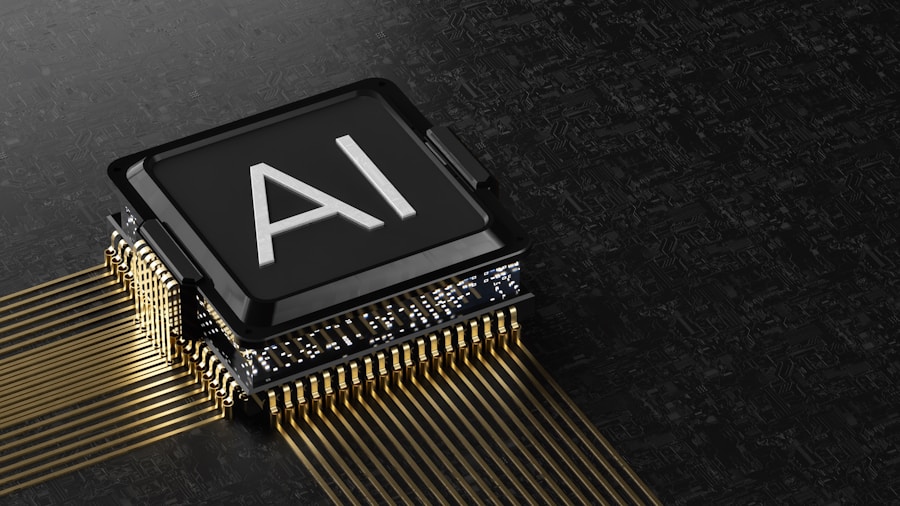
SpaceX has partnered with Nvidia to develop a specialized space-optimized version called the Vera Rubin NVL72 system, designed to launch into orbit during the fourth quarter of 2027, with substantial scaling expected throughout 2028. The terrestrial version of this system combines 72 Rubin GPUs alongside 36 Vera CPUs within a fully liquid-cooled rack. However, adapting this configuration for orbital deployment required significant engineering modifications to address radiation exposure, heat rejection through radiators instead of facility water cooling systems, launch vibration stresses, and the absence of hands-on maintenance capabilities in space.
The Vera CPU itself features 88 custom Olympus cores on a monolithic die, spatial multithreading capabilities, and LPDDR5X memory delivering up to 1.2 TB/s of bandwidth. These specifications enable the processor to handle both the demanding computational requirements of AI orchestration and the stringent reliability demands of satellite operations where repair and replacement are impossible.
What This Means for Buyers and the Computing Landscape
Several important considerations emerge from this announcement for consumers and enterprise buyers. First, the validation of Vera by major companies like SpaceXAI signals that Nvidia’s CPU strategy is gaining credibility in the market. While consumer-facing CPU purchases remain influenced by traditional architectures, alternative CPU architectures like those combining ARM and mainframe computing are beginning to reshape expectations about processor design and capability.
Second, the SpaceXAI deal demonstrates that hyperscale AI infrastructure is becoming increasingly specialized. Rather than relying on general-purpose server CPUs, companies are now deploying purpose-built processors optimized for specific workloads. This trend may influence pricing and availability of traditional server CPUs as manufacturing capacity shifts toward these new specialized designs.
Third, neither Nvidia nor SpaceXAI disclosed the scale of deployment, deal value, or data center rollout timeline, leaving several critical questions unanswered. SpaceX has also publicly acknowledged that its orbital computing ambitions require significantly more chips than it currently has access to, suggesting supply constraints may impact the broader CPU market.
Consumers should monitor how this competitive dynamic between Nvidia, AMD, and Intel shapes server CPU availability and pricing throughout 2027 and 2028. For enterprise buyers considering CPU investments, understanding whether workloads align better with traditional x86 architectures or specialized designs like Vera will become increasingly important as these new processors reach broader market availability.









Write Your Review
No reviews yet. Be the first to share your experience!